
Spiti Valley Tour Package from Delhi: Route, Cost & Complete Itinerary
Beyond Chitkul, greenery vanishes, and you instantly traverse from an environment of pines and apple orchards to one filled with bare rock hills.
The reason for undertaking a tour to Spiti Valley is this change itself. Initially, tourists to Spiti Valley assume they are just taking a brief detour from the scenes of nature to travel to another planet in four days from Delhi.
The guide covers everything about the trip, including the route, pricing, packing, and daily schedules.
Why Choose Spiti Valley Tour
Spiti Valley is one of India’s most beautiful road journeys, passing through beautiful landscapes, ancient monasteries, high-altitude villages, glaciers-fed rivers, and a cold desert environment unlike any found in the Himalayas. Deep in Himachal Pradesh, it is called the “Middle Land,” referring to its location between India and Tibet in every way.
A topography different than any other area in the Himalayas
Unlike other areas in the Himalayas where lush green hills can be found everywhere, Spiti Valley has dark hills, barren valleys, snowy mountaintops, and exceptionally clear skies with no smog at all. It is this contrast of sometimes rugged rocks and snow against other areas where forests and hills can be found that gives people a striking impression when they visit the valley.
The Route Itself Is the Destination
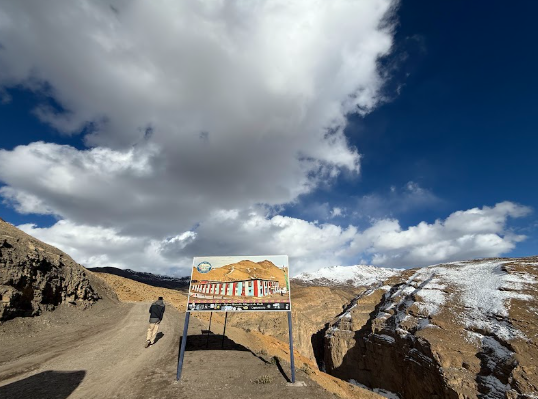
The road trip begins in Delhi, then goes through Shimla, Kinnaur Valley, Chitkul, Tabo, Dhankar, Kaza, Kibber and Chicham to Kalpa. The entire trip begins with a long bus ride from Delhi to Shimla, and from there the shift begins—green hills slowly transform into barren lands.
Chitkul: The Last Settlement before the Namaste
Among the amazing spots to visit in the Himalayas is Chitkul,, the final settlement in India close to the Indo-Tibetan border. With a backdrop of snow-covered hills and the Baspa River, this charming village provides a peaceful, quintessential village experience before heading into the interior regions.
Ancient Monasteries Along the Way
Tabo Monastery is about one thousand years old and is known as the “Ajanta of the Himalayas,” making it one of the most vibrant centers of Buddhism. Further, at Dhankar Monastery, it is hard not to be impressed by the location that overlooks the confluence point of the Spiti and Pin Rivers, which is one of the most photographed locations on the whole circuit.
Kaza and the High-Altitude Villages
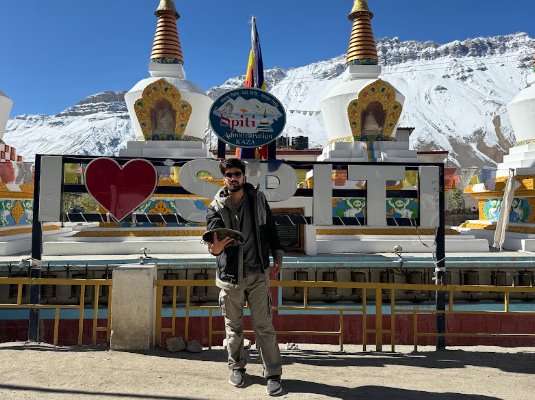
Kaza acts as the capital of the Spiti Valley and a starting point for visiting nearby villages. From here, tours can be made to Langza, Hikkim, and Komic, enabling one of the most memorable days of the trip. Hikkim is home to the highest post office in the world, where you can send a postcard from one of the highest inhabited locations on Earth. Komic is renowned as one of the highest motorable villages globally, whereas Langza is famous for its prehistoric marine fossils and a colossal statue of Buddha.
Key Monastery and Asia’s Highest Bridge
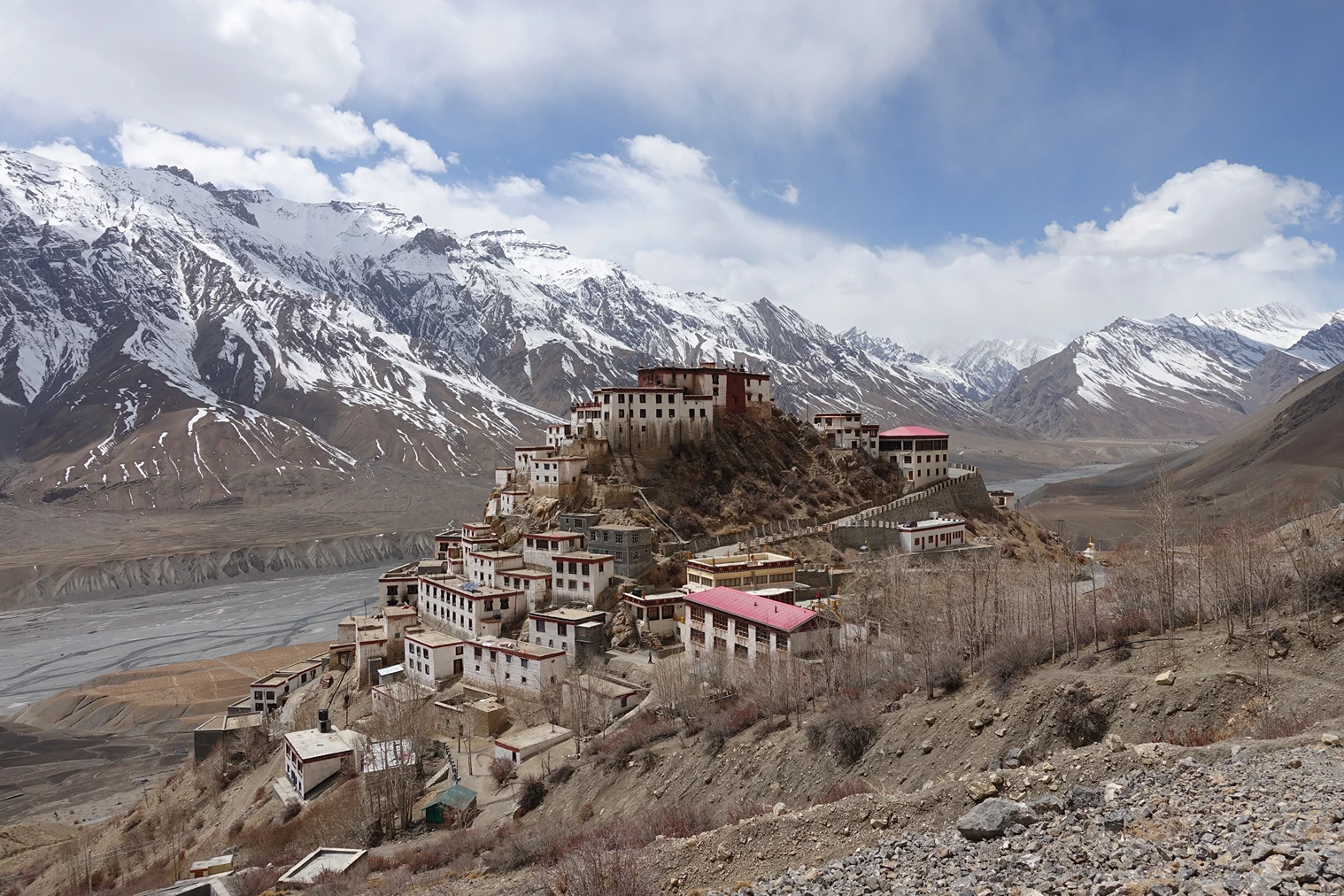
The course also includes Key Monastery, one of the most amazing Buddhist sites in Spiti, as well as Chicham Bridge, the highest suspension bridge in Asia, and Gue Village, which is home to its naturally preserved mummy that is already over 500 years old.
Not Only a Sightseeing Tour
Throughout the trip, tourists get acquainted with the road culture of the Himalayas, the way of life in remote villages, the traditions of Tibetan Buddhism, and some of the most fantastic mountain roads in the country. Regardless of whether one is a photographer, biker, hiker, or a solo traveler, Spiti delivers a genuinely different kind of Himalayan trip.
Spiti Valley Tour from Delhi: Quick Facts
| Detail | Information |
| Region | Himachal Pradesh |
| Best Season | May to October |
| Pickup Point | Delhi / Shimla |
| Duration | 7 Nights / 8 Days |
| Max Altitude | 15,500 ft. |
| Difficulty | Easy to Moderate |
Spiti Valley Travel Guide: Day-by-Day Itinerary
The Spiti Valley travel itinerary breaks the trip into 8 days, with a starting point in Delhi and an ending point in New Delhi.
Day 1: Delhi to Shimla – Overnight Journey via Bus
The adventure kicks off in Delhi, followed by an overnight bus ride to Shimla.
Day 1–2: Shimla to Chitkul
Following Shimla, the trip follows the Sutlej River, traversing through Kinnaur Valley and passing through pine forests and cliffs until finally arriving at Chitkul.
Day 2–3: Chitkul to Tabo
After visiting Chitkul, one will pass by Khab Sangam, where the Sutlej River converges with the Spiti River. The journey will cross Nako and Sumdo, arriving at Tabo.
Day 3–4: Tabo – Dhankar – Kaza
This day features the murals and caves in the Tabo Monastery, followed by the vistas of Dhankar Monastery before heading towards Kaza for spending the night.
Day 4–5: Kaza – Langza – Hikkim – Komic
On this day, various high-altitude villages will be explored, including the Hikkim post office, Komic village, and the Buddha statue alongside fossils in Langza.
Day 5–6: Kaza – Key Monastery – Kibber – Chicham
Key Monastery, Kibber Village, famous for snow leopard sightings, and Chicham Bridge, Asia’s highest suspension bridge, are the highlights of this day.
Day 6–7: Kaza – Gue – Kalpa
On the way back, we cross Gue Village, where we see the well-preserved mummy dating back several centuries, before reaching Kalpa full of beautiful views of the Kinner Kailash range.
Day 7–8: Kalpa – Shimla – Delhi
The last stage is the drive to Shimla and the overnight bus journey to Delhi.
Spiti Valley Tour Package: Inclusions and Exclusions
What’s Typically Included
- All types of taxes
- Six nights of overnight stay, including hotels and homestays at Sangla, Tabo, Kaza, and Kalpa
- Delhi-Shimla and Shimla-Delhi Volvo bus tickets, along with Shimla-Kaza-Shimla tempo traveler transport.
- Entry fees for all monasteries
- A supervisor for the whole trip
- Charges for the driver at night, road taxes and parking charges
- A backup of an oxygen bottle in the vehicle for emergencies
What’s Typically Excluded
- Any food or beverage that is not included in the package, including bottled water and food purchased along highways
- Any personal expenses such as tipping our drivers, admission fees to monuments, or camera fees
- Any expense incurred due to natural disasters, including landslides and roadblocks that must be paid on the spot
Spiti Valley Trip Cost: What Affects the Price
When planning a trip to Spiti Valley, the cost is largely influenced by the group size, type of vehicle, season, and accommodation choice (homestays or hotels). Because taxes, transport, monastery entries, and a seasoned captain are already included in the package, most expenses are included in the package price.
Planning Your Spiti Valley Trip 2026
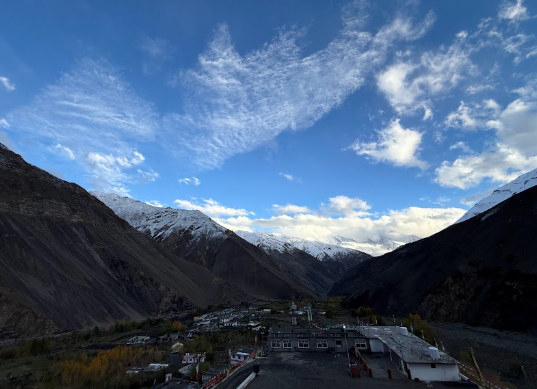
Those planning their Spiti Valley trip in 2026 are advised to stick to May to October, as the Kinnaur-Spiti route is most easily accessible by regular vehicles during these months.
Spiti Valley Winter Trip: A Different Kind of Journey
A Spiti Valley winter trip is an entirely different adventure compared to the regular season and will usually demand specialized winter arrangements due to heavy snow and limited road access. This kind of trip is generally taken by travelers specifically for a snowy valley and frozen landscape, rather than the full circuit explained here.
How to Reach: Delhi to Spiti Valley Route
The first point of entry for most tourists is Shimla, which can be reached from both Delhi and Chandigarh using available transport modes like taxi, train, or bus. After Shimla, various towns such as Narkanda and Sangla have to be crossed before arriving at Chitkul. The journey here continues through mountainous areas, from Chitkul to Kalpa and to Nako, Tabo, Kaza, returning to the starting point after completing the entire Spiti circuit.
Final Thoughts
The Spiti Valley tour package is not just a sightseeing trip but a journey through some of the most stunning and isolated areas in the Himalayas. From the lush valleys of Kinnaur and the serene Chitkul to ancient monasteries, hilly towns, and the rugged beauty of Kaza, the tour will be different every day.
Planning your Spiti Valley trip in 2026 during the accessible months will ensure easier travel, while a clear understanding of the itinerary, included and excluded services, and travel conditions will help you plan your budget realistically. If you are passionate about mountain photography, Buddhist culture, or thrilling roads, Spiti would be an unforgettable adventure in the Himalayas.
Frequently Asked Questions About Spiti Valley Tour Packages
What is included in a standard Spiti Valley tour package from Delhi?
Usually, these packages include transportation in a Volvo and a tempo traveler, accommodation in a hotel or homestay, tickets for monastery visits, a team captain, and an oxygen cylinder, while personal meals and expenses are excluded from the price.
What is the best time for a Spiti Valley trip in 2026?
May to October is the best time to take a road trip there. The Kinnaur-Spiti road is open and accessible.
Is a Spiti Valley winter trip different from the regular season trip?
Yes, because there is a lot of snow on the road and it is mostly closed during the winter season. Thus, it requires some special arrangements for those traveling to the valley during the winter months.
How long does a Spiti Valley tour from Delhi typically take?
Most trips are 8 days and 7 nights in duration, starting from Delhi to Shimla, Kinnaur, and Spiti, and vice versa.
What affects the overall Spiti Valley trip cost?
The crucial factors that contribute to the total cost of any package are the size of the group, type of transportation, time of the year, and the kind of accommodation (either hotels or homestays).
Related Blogs
Spiti Valley Tour Package Packing List: What to Carry for Your Trip
Ask anyone who’s done Spiti twice, and they’ll tell you the same thing: the trip that goes wrong usually goes…
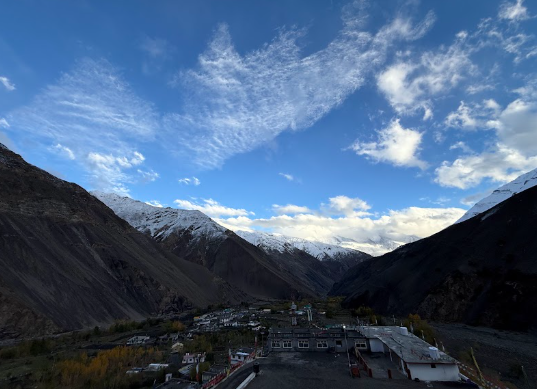
Spiti Valley Tour Package 2026: Complete Travel Guide for First-Time Visitors
There’s a reason Spiti keeps showing up on every “before you turn 30” travel list, and it’s not just the…
10 Things to Know Before Booking the Brahmatal Trek
Booking a Himalayan trek usually starts with a scenic photo and ends with a dozen tabs open, trying to figure…