
Brahmatal Trek in Winter: Complete Snow Trekking Guide
There’s a difference between reading about a snow trek and actually standing waist-deep in a drift at 12,000 ft., watching your breath freeze mid-air. The Brahmatal trek in winter is one of the few Himalayan routes that lets first-timers experience that difference without needing years of mountaineering behind them. This guide covers what winter actually looks like on this trail, when to go, what changes underfoot, and how to prepare for a trek that’s as much about snow craft as it is about walking.
What Makes the Brahmatal Trek in Winter Different
A summer trek and a winter trek of the same path could be two completely different journeys altogether, and the Brahmatal trek serves as one of the best examples. The Brahmatal trek in winter makes the whole journey a totally different experience, with everything from the forest floor and meadows to the ridge before Brahmatal Pass covered in snow, making the trek an alpine snow trek.
Depth of Snow Cover and Condition of Trails
From late December to February, snow on the ground increases throughout all elevations. The lower parts of the forests around Lohajung may have very little snow, while the slopes towards Brahmatal Pass will have an impressive amount of snow, depending upon the snowfall just before your trek. Some signs along the way to the Brahmatal Pass may get completely covered by snow, which makes having good guides during wintertime pretty important.
Temperature Changes You Should Expect
During the daytime, when the sun is shining brightly above, the weather does not seem to be a problem. However, at night, temperatures will drop below freezing in places like Bekaltal and Brahmatal. Sometimes it becomes pretty windy and quite unpleasant, even if the day has started comfortably.
Brahmatal Trek Best Time: When Winter Conditions Peak
When determining the best time for the Brahmatal trek, it mainly depends on the type of winter trekking experience you prefer.
Late December to Mid-January: Fresh Snow and Few People
During this time, you can expect fresh snowfall as the trails will be relatively new. This time is favorable for hikers searching for frozen snow in winter trekking photos. Nonetheless, this season also means colder nights along with heavy snow on the ground.
Late January – February: Peak Season for Winter Trekking
This period is usually viewed as the most popular time for trekking, as the snow cover is deepest, frozen lake views are spectacular, and you can see mountains clearly.
March: Transition Period
By March, the snow begins to melt at lower altitudes while it stays intact near the pass. This provides trekkers with unique experiences as they will see both green patches and white snow throughout their hike.
The Brahmatal Lake Trek Experience in Winter
The trek to the Brahmatal region is likely the prime reason individuals choose this section over the other wintry alternatives available in Uttarakhand.
A Lake That Partially Submerges
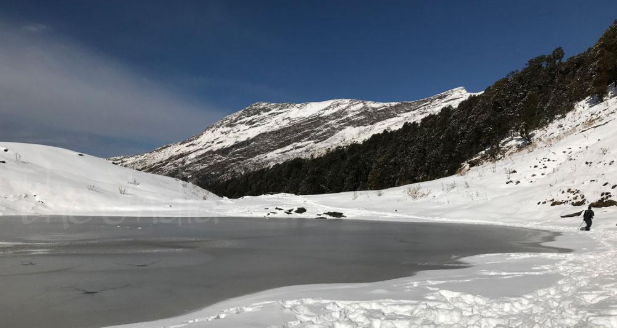
Brahmatal Lake is known to partially freeze in the winter, forming ice across different parts of the lake while snow collects on the banks and in the surrounding forest. The lake is also part of local folklore connected to Lord Brahma, providing cultural context to the otherwise breathtaking scenery.
Why It Makes Good Pictures
The combination of dark forest and white snow covering, along with the light ice on the surface of the lake, creates a magnificent contrast. The early morning light tends to be the perfect moment for photography before the group sets off for the trek.
Brahmatal Trek Difficulty and Distance in Winter Conditions
Snow has a greater impact on trek difficulty than one may know, despite the fact that the degree of complexity remains constant throughout.
Effect of Snow on Difficulty
Brahmatal, which is classified as average regardless of the season, has its unique cost in winter conditions. Traipsing through fresh or loose snow exerts a bigger amount of energy for each step compared to traveling along a dry path. It is usually evident in the tempo of climbing up Brahmatal Pass. Physically fit people can still do that, but they should be ready in advance to climb at a slower pace compared to the summer season.
Trekking Distance Remains the Same, but Time Changes
The total trekking distance from Lohajung through Bekaltal, Brahmatal, Brahmatal Pass, Tilbudi and back through Wan Village is more or less the same in every season. What changes is the time it takes to cover the distance. Wintertime is often longer for the hike because of snow on the ground and shorter days.
Essential Gear for the Brahmatal Trek in Winter
Base Layers
Thermal base layers are mandatory, topped with fleece or padded mid-layers and a water-resistant outer shell jacket and trekking pants. In addition, a woolen cap, gloves, and socks are more important than usual when you are going for a winter trek because cold feet can end your trek in no time.
Footwear & Traction
A good pair of trekking shoes with good ankle support and proper sole traction are a must-have, and additional gaiters are recommended for parts of the trek with deep snowfall. Trekking poles are quite helpful while walking on the snow-laden ridge on the way down from Brahmatal Pass.
Winter Trek Specific Items
As daylight in winter is limited, a headlamp with spare batteries is a must-have, along with sunscreen lotion and sunglasses, because the reflection of the sun’s rays from the snow can be really harsh even at low temperatures.
Tips for a Safe Winter Trek on Brahmatal
Follow Local Guides for Trail Conditions
Snow can obscure trail signs and shift the conditions every day. Local guides with experience can assess new snow, avoid unstable sections, and control their pace. This matters during the winter walk at Brahmatal more than any other aspect.
Know Your Own Pace on Summit Day
Brahmatal Pass is the toughest stage of the hike. Starting early, not going faster than necessary, and drinking plenty help balance the work done with the altitude and snow.
Layer Your Clothes Smartly
Many people make the mistake of taking one thick jacket instead of several light ones. With layering, you can adjust to temperature changes: from hot sun during the day to frost at night.
Final Thoughts
A trek to Brahmatal in winter is a rare and exciting combination of easy access, adventure, and breathtaking Himalayan landscapes. With forests blanketed in snow, a half-frozen Brahmatal Lake, tranquil campsites, and breathtaking views of such peaks as Trishul and Nanda Ghunti, your trek will become unforgettable.
Although winter treks are not as simple as they seem, proper preparation is key to successful trekking in the snow. By layering appropriately, wearing sturdy shoes, bringing trekking poles, staying well hydrated, and having an experienced guide, you can be sure everything will go smoothly during the trek.
Brahmatal is perfect for fit beginners, so if you are ready to take an unforgettable journey to the Himalayas in winter, choose your timing wisely and prepare for changing conditions.
Frequently Asked Questions About the Brahmatal Trek in Winter
When is the Brahmatal trek best time for maximum snow?
The period from late January to February is generally regarded as the best period for the deepest and most reliable snow cover as well as the most beautiful views of frozen lakes.
Is the Brahmatal trek in winter suitable for beginners?
Yes, it is classified as a moderate trek and suitable for active beginners, though winter conditions make it much more strenuous due to snow and cold.
What does the Brahmatal lake trek look like during winter?
The lake partially freezes, leaving some parts of its surface covered in ice, while the surrounding forest and shores get covered with snow, making it one of the most photographed places on the trek.
Does snow affect the Brahmatal trek difficulty rating?
Despite snow making the trek physically more demanding, the level of difficulty is still counted as moderate year-round.
What gear is essential for the Brahmatal trek in winter?
Thermal undergarments, waterproof trekking footwear with great grip, gaiters, trekking sticks, a flashlight, and sunblock are among the most critical.
Can I still see the Himalayan peaks clearly during the Brahmatal trek in winter?
Yes, in winter, the visibility of peaks and mountains is usually amazing compared to summer expeditions. The summits of Trishul, Nanda Ghunti, Chaukhamba, and Neelkanth become visible in winter, which is not the case in summer.
Related Blogs
Spiti Valley Tour Package Packing List: What to Carry for Your Trip
Ask anyone who’s done Spiti twice, and they’ll tell you the same thing: the trip that goes wrong usually goes…
Spiti Valley Tour Package 2026: Complete Travel Guide for First-Time Visitors
There’s a reason Spiti keeps showing up on every “before you turn 30” travel list, and it’s not just the…
Spiti Valley Tour Package from Delhi: Route, Cost & Complete Itinerary
Beyond Chitkul, greenery vanishes, and you instantly traverse from an environment of pines and apple orchards to one filled with…