
Best Time for Kuari Pass Trek: Which Season Is Right for You?
If you ask five trekkers what the best time to trek Kuari Pass is, you might just get five different answers, with some saying January due to snowfall, others saying April because of the meadows, and yet others holding on to the belief that September provides clear skies.
They all are right, in their own ways. Kuari Pass, unlike other treks in the Himalayas, varies with the season, and while it depends on “the best month,” it depends more on the type of trek one wants.
This guide will help you understand the different seasons of the trekking route and what to expect from each.
Why Season Matters So Much on the Kuari Pass Trek
The typical experience on most trails in Uttarakhand can be summed up simply as green in summer, brown in autumn, and white in winter. Kuari Pass stands out as it can be trekked in all three seasons, with each season offering a different trail. While the wooded sections of the trail remain constant, the meadows, ridge walk, and summit views change considerably with the season. Hence, it attracts many trekkers who return to experience it in another season.
Winter (December to March): The Kuari Pass Winter Trek
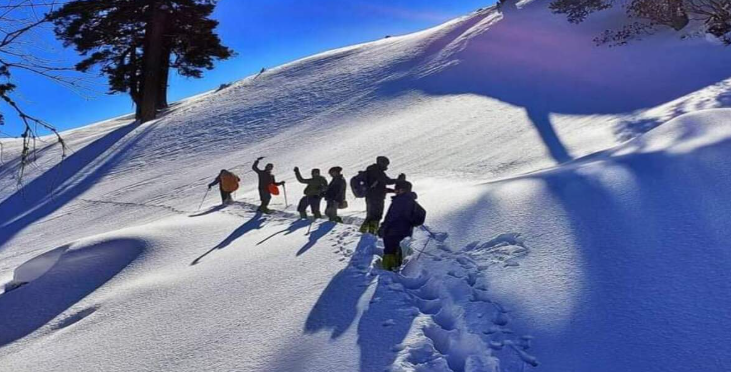
If there is one version of the journey available, it has to be the Kuari Pass winter trek. The entire trail is covered in snow from mid-December to March, adding more beauty to the already beautiful trail.
Expectations in Winter:
- Snow-covered trails from Gulling Top to the Kuari Pass, which can often get knee-deep or deeper.
- Clear skies and crisp weather in the morning provide excellent views.
- Sub-zero temperatures at the camp sites, especially at Tali Forest Camp.
Compared to peak travel season, the winter trekking season invites fewer travelers, making the experience calmer and quieter.
Why Winter Is the Most Popular Season
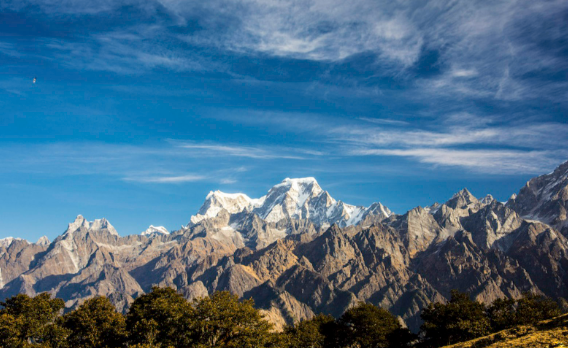
During the winter months, the Kuari Pass can truly be called the “Lord Curzon Trail.” The Gurson Bugyal turns into a vast, pristine snowfield; the ridge walk leading to the pass becomes a true snow trek, and the peaks – Nanda Devi, Dronagiri, Kamet, Chaukhamba and Trishul – are visible against the clear blue skies, safely devoid of the summer haze. It is a hot favorite among trekkers, as one can indulge in photography sessions that would be impossible at other times of the year.
Things to Keep in Mind while Trekking in Winter
However, snow comes with its own set of challenges, making trekking a bit more difficult. The use of trekking poles, good waterproof boots, and gaiters is more essential compared to other seasons. Another thing to consider is that, since the days are shorter, trek leaders usually start trekking early to reach camp before it gets dark.
Spring (April to May): Meadows in Bloom
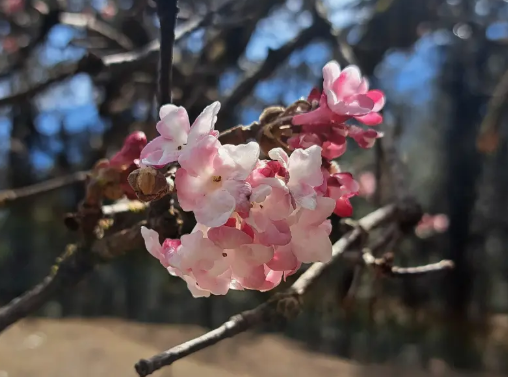
Most of the snow at lower elevations would have melted by April, and Gurson Bugyal starts turning green as flowers come up. It is another kind of trek, not as severe as peak winter; it is cold at high camps, but there is no heavy snow.
- Snow in patches near the top of the pass with green meadows below
- Milder weather conditions compared to the extreme winters
- Rhododendron forests blooming in the lower parts of the trek
- Not so clear mountains
- Spring is ideal for trekkers who would like a little bit of everything.
Autumn (September to November): Clear Skies, Fewer Crowds
The fall season is the calmest and most underestimated time to make this trek. The monsoon rain ends by mid-September, which means free trails, an extraordinarily clear sky, and lovely green woods.
What to Expect in Autumn?
- Extremely dry trail without snow.
- Great view for mountain photography.
- Fairly comfortable weather for trekking.
- Noticeably fewer hikers than in winter.
For hikers who want to enjoy the views of the ridge walk without carrying their snow-related gear, autumn is usually a reasonable choice.
Kuari Pass Trek Difficulty Across Seasons
Kuari Pass trek difficulty varies based on when you do it, despite the fact that the trail remains moderate all through the year.
Winter (Dec-Feb): Higher difficulty because of the snow and the cold as well as the reduced daylight hours. Manageable though by newbies who are somewhat fit.
Spring (April-May): Moderate difficulty. May have some slippery parts around the peak due to melting snow.
Autumn (September-November): Easiest season to trek as far as difficulty is concerned due to dry trails.
In all seasons, being reasonably fit to walk 8-10 km should suffice. Winter requires just a bit more from the equipment than from the body.
Kuari Pass Trek Distance: Does It Change by Season?
The length of the Kuari Pass trek does not vary much throughout the year, averaging 33-35 kilometers. What changes is the expedition tempo: winter trips take longer because of frozen ground, while autumn trips are swifter on easier terrain.
Kuari Pass Trek Cost: How Season Affects Pricing
The costs of the Kuari Pass trek can fluctuate depending on the time of year you choose to take the trip, primarily due to increased demand and the associated need for additional equipment or staffing during the winter season.
It’s well known that winter slots tend to be more expensive, requiring specialized skills and extra measures due to their high demand in December and January.
Spring and fall slots tend to be comparatively less expensive, since they attract less interest than full-fledged winter ones.
It is essential to check whether your package price includes transportation, accommodation, meals during the trek, permits, and guiding services, and to also see what is not covered in the package to make a proper price comparison.
Booking the trip a few months in advance is definitely a better idea than going for a last-minute deal if you’re looking for a December-January winter-time slot, since it will allow you to save more money and get a better price.
So, Which Season Should You Choose?
- Looking for the classic snow-covered Kuari Pass winter trekking experience? The best time to visit this place is from December to February.
- Looking for green meadows along with a touch of snow just before reaching the summit? April is when this is possible.
- Looking for dry trails, clear skies, and fewer crowds? The best months for this are from September to November.
- New to trekking? Autumn is the best choice for you.
No matter what season you choose, you will experience an amazing ridge hiking trail.
Conclusion
The timing of the Kuari Pass Trek depends on what you want to achieve. In winter, the route becomes at once snowy and exquisite. In spring, however, this time of year is characterized by green meadows and warm weather, while autumn offers dazzling mountain views with fewer trekkers.
Although the beauty of the area varies with the seasons, the route will always offer captivating ridge walking, panoramic views of the Himalayas, and peaceful campsites. Whether you are going to test your trekking skills for the first time or try to discover something new, Kuari Pass will make your journey unforgettable.
Frequently Asked Questions About the Best Time for Kuari Pass Trek
What is the best month for the Kuari Pass trek?
For those who want a completely snowy trek experience, the best time to visit Kuari Pass is between December and March. However, if you’d like to skip the snow, September to November probably guarantees more favorable trek conditions.
Is the Kuari Pass winter trek difficult for beginners?
Although it is rated moderately challenging, the trek can still be done by a beginner in good shape. Nevertheless, it is advisable to rent snow gear and be prepared a little more than for an autumn or spring trek.
Does the Kuari Pass trek distance change with the season?
The distance for the Kuari Pass trek remains the same, with only walking speed varying due to weather conditions.
Is the Kuari Pass trek cost higher in winter?
The price of the winter batches is noticeably higher than that of spring or autumn batches. The reason is that the winter months are expected to bring more trekkers, plus there will need to be snow-related adjustments.
Can I do the Kuari Pass trek in monsoon season?
Monsoon season is generally considered unsuitable for this trek due to slippery trails, limited visibility, and risky road routes from the threat of landslides.
Which season offers the best mountain views on Kuari Pass?
Winter is the best season for enjoying the finest views of Nanda Devi, Dronagiri, Kamet, Chaukhamba, and Trishul due to clear weather and the low influx of hikers on the trail in autumn mornings.
Related Blogs
Spiti Valley Tour Package Packing List: What to Carry for Your Trip
Ask anyone who’s done Spiti twice, and they’ll tell you the same thing: the trip that goes wrong usually goes…
Spiti Valley Tour Package 2026: Complete Travel Guide for First-Time Visitors
There’s a reason Spiti keeps showing up on every “before you turn 30” travel list, and it’s not just the…
Spiti Valley Tour Package from Delhi: Route, Cost & Complete Itinerary
Beyond Chitkul, greenery vanishes, and you instantly traverse from an environment of pines and apple orchards to one filled with…