
Kuari Pass Trek 2026: Complete Guide for First-Time Trekkers
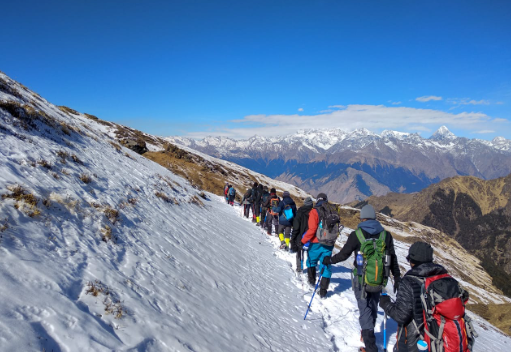
If, while you’re going through various trekking trails in 2026, you find yourself pulled back to the same picture of a narrow ridge running through a snowy mountain wall again and again, then there is a reason.
This photograph is from Kuari Pass, one of the few trekking destinations in Uttarakhand where experienced and inexperienced trekkers share the same path with completely different intentions yet are pleasantly surprised in the end.
This article explains everything an amateur trekker needs to know before embarking on the Kuari Pass trek in 2026, which includes the path, the difficulty, distance, essentials, and logistics.
Why Choose Kuari Pass Trek
When it comes to the most picturesque and satisfying hiking routes in the Indian Himalayas, the Kuari Pass Trek in Uttarakhand comes third to none. The trail is famous for its ridge walks reminiscent of movies, magnificent oak forests filled with rhododendron trees, vast alpine meadows, and camping sites at the foot of India’s highest peaks. Trekkers and even old British travelers could not help but call the route the “Lord Curzon Trail,” named after the Viceroy of India who was said to reckon it one of the best hiking routes he had ever taken.
The route starts in Garhwal, one of the regions of Uttarakhand, and leads through small, tranquil villages of the Himalayas, lush forests, and high-altitude grasslands, and along exciting ridges until you finally reach Kuari Pass at an altitude of 12,763 feet. The major peculiarity of this trail is the breathtaking panorama: it offers a full 180-degree view of the most famous Himalayan peaks, such as Nanda Devi, Dronagiri, Kamet, Chaukhamba, the Hathi-Ghoda peaks, and Trishul, without any obstructing obstructions.
A Landscape That Keeps Changing
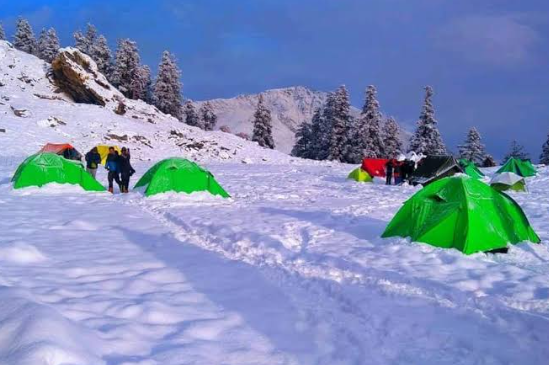
While most treks focus on exploring a specific type of landscape, Kuari Pass takes people through varied terrain. The climb from Joshimath leads you through the dense forests of oaks, rhododendron, and deodars and takes you to the rolling green meadows and sharp ridges. Gurson Bugyal is one of the most beautiful spots trekkers come across, stopping to take in the snow-capped mountains surrounding the meadow. In spring and summer, the beautiful meadow is dressed in fresh green grass and colorful flowers. But in winter, it’s all covered with snow.
Built for Beginners, Loved by Experts
This is the aspect that catches people off guard: although it is at an elevation and offers magnificent views, Kuari Pass does not require any technical climbing expertise or extensive trekking experience. Just a basic fitness level is enough to complete it, so it has become a popular choice for individuals who haven’t trekked in the Himalayas yet but still want to enjoy some adventure.
Compared to the more commercialized trails, it tends to be less crowded. There is something in the tranquility of the forest, meadows, and ridge trail that distinguishes it from other treks. Even the chance to see Garhwali mountain life along the way adds to the hike’s uniqueness.
Regardless of whether you are a novice trekker or an experienced one, you are likely to find the Kuari Pass trek an excellent experience.
Kuari Pass Trek Distance and Route Overview
The Kuari Pass trek is around 33-35 km long and encompasses the entire journey of trekking between Joshimath and Kuari Pass. The route leads through Gulling Top, Tali Forest camp, and Gurson Bugyal, and finally returns to Joshimath from Auli.
Kuari Pass Trek Difficulty: What First-Timers Should Know
Kuari Pass Trek Difficulty is said to be moderate on the scale. It is definitely not an easy one, but not so tough either, as it doesn’t require any specific experience with high-altitude treks or mountaineering knowledge. Here are a few facts about the Kuari Pass Trek that need your attention:
- Distance covered by walking during the trek is quite reasonable – 4 to 7 hours per day.
- The highest peak of this trek reaches an elevation of 12,763 feet above sea level.
- Winter trekking (in the December-March period) is snowy, which means there will be an extra burden on the body. Snow-covered paths need special shoes and trekking poles.
- Adequate physical preparation, some practice in walking or jogging, and psychological readiness for cold mornings.
- Having walked some trails and been able to walk 8 to 10 kilometers without big effort would be enough preparation.
Kuari Pass Trek from Dehradun: Getting There
Most people start trekking from Dehradun for the Kuari Pass trek to Joshimath via Rishikesh.
Drive from Dehradun to Rishikesh
The place is easily accessible by train, bus, and flight. Traveling from Dehradun to Rishikesh would take about an hour. Then the road journey begins from Rishikesh towards Joshimath.
Drive from Rishikesh to Joshimath
It will take about 9-11 hours and covers a distance of 256 kilometers from Rishikesh to Joshimath. The road goes across the famous river confluences in Uttarakhand, including Devprayag, Rudraprayag, Karnaprayag, and Nandprayag. Besides rivers and mountains, this route will also go through mountain roads, valleys, waterfalls, and small Himalayan villages. This drive would be long but not boring at all.
From Joshimath to Trailhead
Joshimath is the starting point of the trekking journey. Trekkers then return to their starting point, usually either Dhak or Karchi village.
Detailed Day-by-Day Kuari Pass Trek Itinerary
Day 1: Rishikesh to Joshimath
Our journey begins with an early-morning scenic drive from Rishikesh to Joshimath via Devprayag, Rudraprayag, Karnaprayag, and Nandprayag. Snacks and lunch are usually provided on the way. In the evenings, the trekkers arrive at Joshimath to check into a guesthouse/hotel, have dinner, and get some rest before the trek.
- Drive distance: 256 km approx.
- Drive time: 10-11 hrs.
- Elevation: 6,724 ft.
- Stay: Guest house/Hotel in Joshimath
Day 2: Joshimath to Gulling Top
The trek actually begins today as the trekkers leave Joshimath and hike through wooded trails to reach Gulling Top.
Day 3: Gulling Top to Tali Forest Camp
Further hiking through the forest brings us to Tali Forest Camp, one of the more serene campsites on our journey.
Day 4: Tali Forest Camp – Kuari Pass – Khullara Top – Return
This is summit day. The trekker reaches Kuari Pass at an elevation of 12,763 feet by following the entire ridge line, taking in views of Nanda Devi, Dronagiri, Kamet, Chaukhamba, and Trishul before continuing to Khullara Top and returning to camp.
Day 5: Tali Forest Camp – Gurson Bugyal – Auli – Joshimath
After passing through the beautiful Gurson Bugyal meadows, the trekker heads towards Auli and then returns to Joshimath.
Day 6: Joshimath to Rishikesh
The last day of the trek involves a return journey from Joshimath to Rishikesh.
Kuari Pass Trek Package: What’s Included and Excluded
Most packages for the trek through Kuari Pass are sold as complete road-to-summit-to-road packages. Here are the items included in these packages and what is not included.
Inclusions
- Transportation from Rishikesh to Rishikesh.
- Staying in guesthouses and camps.
- Having meals during the trek (breakfast, lunch, dinner).
- Hiring of experienced trek leaders and guides.
- Use of camping equipment.
- Obtaining the forest permits and paying for entry.
- Provision of first aid and medical help.
- Whenever necessary, the assistance of support staff.
- Trek coordination and providing safety equipment.
- Provision of basic living conditions during the trek.
Exclusions
- Personal expenses
- Insurance
- Personal trekking gear
- Porter or mule charges
- Emergency evacuation charges
- Snacks and beverages
- Tips and gratuities
- Any cost due to delays or weather
- GST (if applicable)
- Anything not specifically mentioned in inclusions
How to Prepare for the Kuari Pass Trek
Fitness Level Needed
Basic cardiovascular fitness is enough for this trek. However, if you want to make this activity a little easier, it would be helpful to have a fitness routine in place a few weeks before the trip.
What to Bring: Clothes
- Thermal inner layers
- Warm mid-layer jackets (fleece or thickened)
- Waterproof outer jackets and trekking pants
- Woolly hat, sun hat, gloves and warm socks
What to Bring: Tools
- Shoes with solid ankle support
- Backpack including rain cover and a day pack as an option
- Headlamp or flashlight with spare batteries
- Reusable water bottles or a hydration system
- What to Bring: Personal Items
- Sunblock, lip balm, sunglasses, and basic toiletries
- Personal medicine and a basic health kit
- Power bank and charger
- Passport and cash for small purchases
Final Thoughts
The Kuari Pass has earned its reputation for the views along the way, not just the summit photo. As you walk through the forest trail and transition to the ridge, you will arrive at a meadow with a surreal view.
Once you arrive at the pass after your final push, you will be rewarded with a breathtaking view of the mountains. If you are a first-time trekker in the Himalayas, then you shouldn’t miss this place in 2026, as it is a great destination that should be added to your list.
FAQs About Kuari Pass Trek
Is Kuari Pass Trek suitable for beginners?
Yes, beginners with good fitness can complete the trek successfully.
Why is Kuari Pass famous?
It is famous for panoramic Himalayan views and scenic ridge walks.
What is the best time for Kuari Pass Trek?
March to June and September to December are considered ideal.
How difficult is the trek?
The trek is moderate with long trekking hours on summit day.
What type of accommodation is provided?
Guesthouses at Joshimath and tents during trekking days.
Related Blogs
Spiti Valley Tour Package Packing List: What to Carry for Your Trip
Ask anyone who’s done Spiti twice, and they’ll tell you the same thing: the trip that goes wrong usually goes…
Spiti Valley Tour Package 2026: Complete Travel Guide for First-Time Visitors
There’s a reason Spiti keeps showing up on every “before you turn 30” travel list, and it’s not just the…
Spiti Valley Tour Package from Delhi: Route, Cost & Complete Itinerary
Beyond Chitkul, greenery vanishes, and you instantly traverse from an environment of pines and apple orchards to one filled with…